The Parent Engagement Problem: Volunteer Requirements vs. Incentives

Parent engagement is one of the most discussed priorities in K-12 schools, especially private and charter schools. Yet many parent volunteer coordinators struggle to reach engagement targets of 80%+ of families.
Despite reminder emails, sign-up sheets, and regular announcements, overall parent volunteer hours often stall at 20–30% participation. Does this sound like your school?
We'll deep-dive ways to promote parent engagement, including implementing volunteer requirements or incentives to increase engagement among all families at your school.
At the center of the parent engagement problem is a practical question:
Should schools require parent volunteer hours with penalties, or rely on incentives and rewards to motivate families?
Let’s examine what actually increases parent engagement and how parent volunteer coordinators can build an engagement program that works long term.
The Real Consequences of Low Parent Engagement
When schools ask how to engage parents in schools, the conversation often focuses on communication strategies. But communication alone does not solve inconsistent participation.
In private and charter schools especially, parent volunteer hours often support essential operations. Volunteers help staff events, assist teachers in the classroom, coordinate fundraisers, support traffic flow, contribute professional services, and strengthen the broader school community.
Low parent engagement creates a cycle of stress: coordinators spend more time recruiting, manually tracking hours, answering questions about requirements, and resolving end-of-year disputes. Burnout becomes a real risk.
An increase in parent engagement not only removes burden from school staff and administration, but promotes a positive school community and can improve student outcomes.
What Motivates Parents to Volunteer?
It's a common misconception that lack of parental involvement means that parents don't care to be involved, but that isn't truly the case. Instead, it's because getting involved in the school community can feel confusing, inconvenient, or inconsequential.
Parents will feel more motivated to volunteer if volunteer expectations (which include requirements and incentives) are communicated clearly and often, if accessible volunteer opportunities are offered, and if schools stress the value and importance of parent engagement in the school community.
Parent Volunteer Hours: What the Trends Reveal
Across private and charter schools, parent engagement patterns tend to follow structure.
Schools without defined parent volunteer hour expectations commonly report engagement rates between 10 to 30%. Participation is optional, and behavior reflects that flexibility.
By contrast, schools that establish minimum parent volunteer hours often see dramatically higher participation, in many cases exceeding 60 to 80%. When expectations are communicated, documented and tracked, parents are more likely to follow through.
Approach #1: Required Parent Volunteer Hours
Many private and charter schools choose to require parent volunteer hours to support school operations, build community, and ensure that families get involved in school.
Most required programs set an annual minimum per family, often ranging between 10 and 40 hours. Some schools adjust expectations for single-parent households or families with multiple enrolled students. Others distinguish hours requirements between tuition assistance families and non-assisted families. Often these schools implement a financial fee for incomplete hours as either a per-hour rate or a flat annual charge.
When implemented thoughtfully, required hours can normalize participation. For a successful program, it's important for schools to communicate expectations up front. Eventually, volunteering becomes part of the school culture rather than an optional activity for a few families.
Why Required Hours Increase Parent Engagement
Required programs work because they eliminate ambiguity. Parents know exactly what is expected, how many hours are required, and how progress is measured. Once families begin volunteering to meet their requirement, some schools find that parents continue beyond the minimum requirement, because it's a rewarding experience.
For schools, required programs can also provide operational stability. For example, smaller schools may need parents to volunteer in the cafeteria, during traffic duty, or at recess to continue regular operations. For larger schools, it's easier to plan school events when there's a clear understanding that a majority of parents will volunteer to support event operations.
Pros and Cons of Requiring Parent Volunteer Hours
Required volunteer hours have their pros and cons, and it may not be the best option for all schools. For example, in the United States, all public schools, some charter schools, and some nonprofit private schools cannot technically require parent volunteer hours and charge a fee for noncompliance. Schools that do choose to require hours must balance requirements and penalties in a way that parent volunteers will understand and find fair.
Pros:
Clear requirement shows parents what is expected of them up front
An hourly or annual fee for incomplete hours can motivate parents to get involved more
Schools can increase events or ramp up operations when they can predict parental involvement
Cons:
Requirements/penalties may be not be tolerated by families if the costs or time commitments are too high
Families may opt out of volunteering completely by paying the fee up front if they can
Schools can become too dependent on parental involvement and face a shortage if requirements change in future
Each school should weigh the pros and cons to see what will work best for their parent communities. Parent engagement should be a partnership, so before implementing any major changes to a volunteer program it can be helpful to get parent feedback via a survey before the start of the school year.
However, requiring hours must be handled carefully. If expectations are introduced mid-year or communicated inconsistently, families may feel frustrated. Enforcement can be difficult without clear tracking and communication.
The effectiveness of required parental involvement programs depends on how clearly they are structured, communicated, and tracked.
How to Successfully Require Parent Volunteer Hours
Schools that succeed with required programs establish expectations during enrollment, document them in family handbooks, and reinforce them consistently throughout the year. They provide flexible volunteer opportunities for parents to reduce participation barriers. Schools can also create a more equitable program by implementing different volunteer requirements for single parent households vs. two parent households, or different requirements for families receiving tuition assistance.
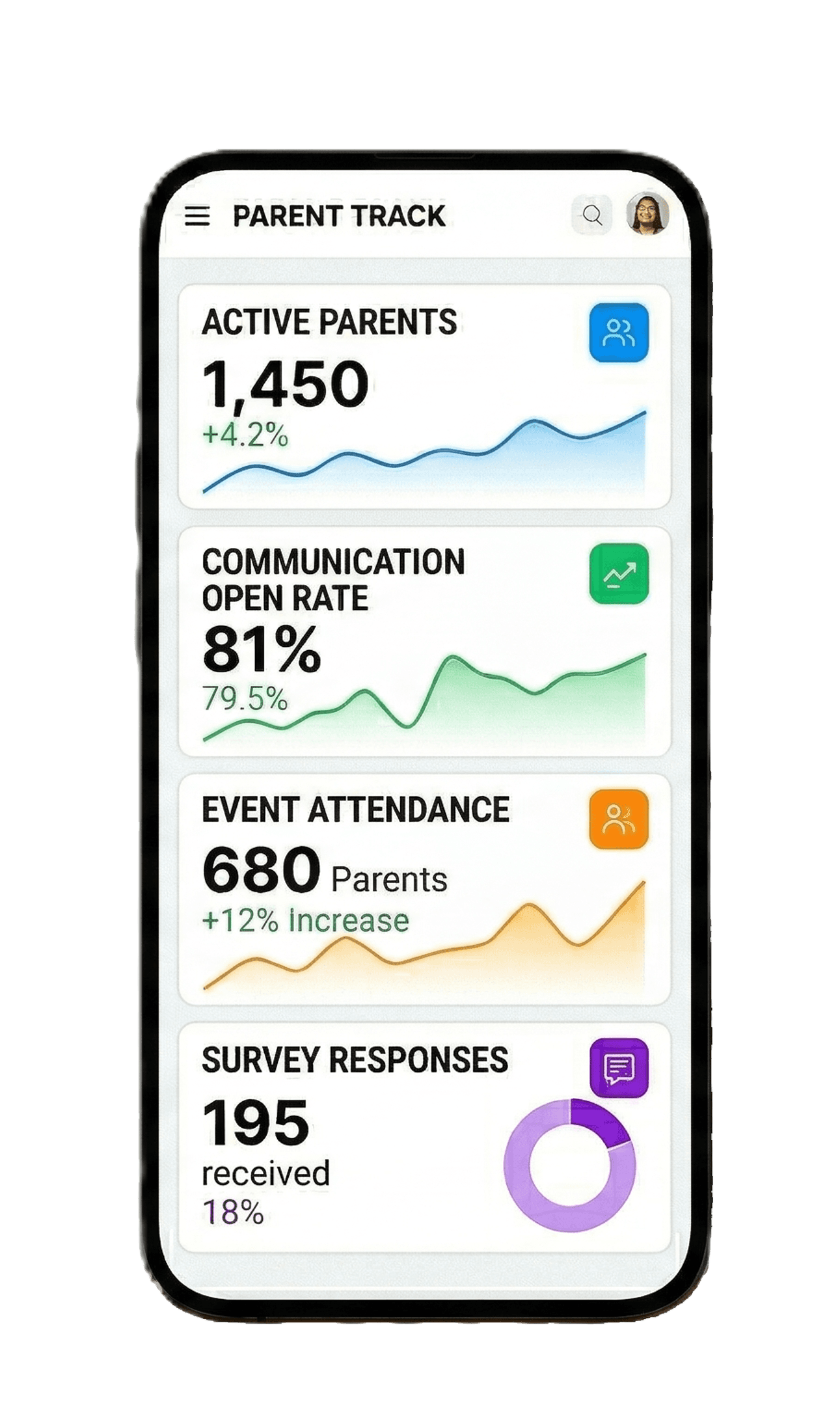
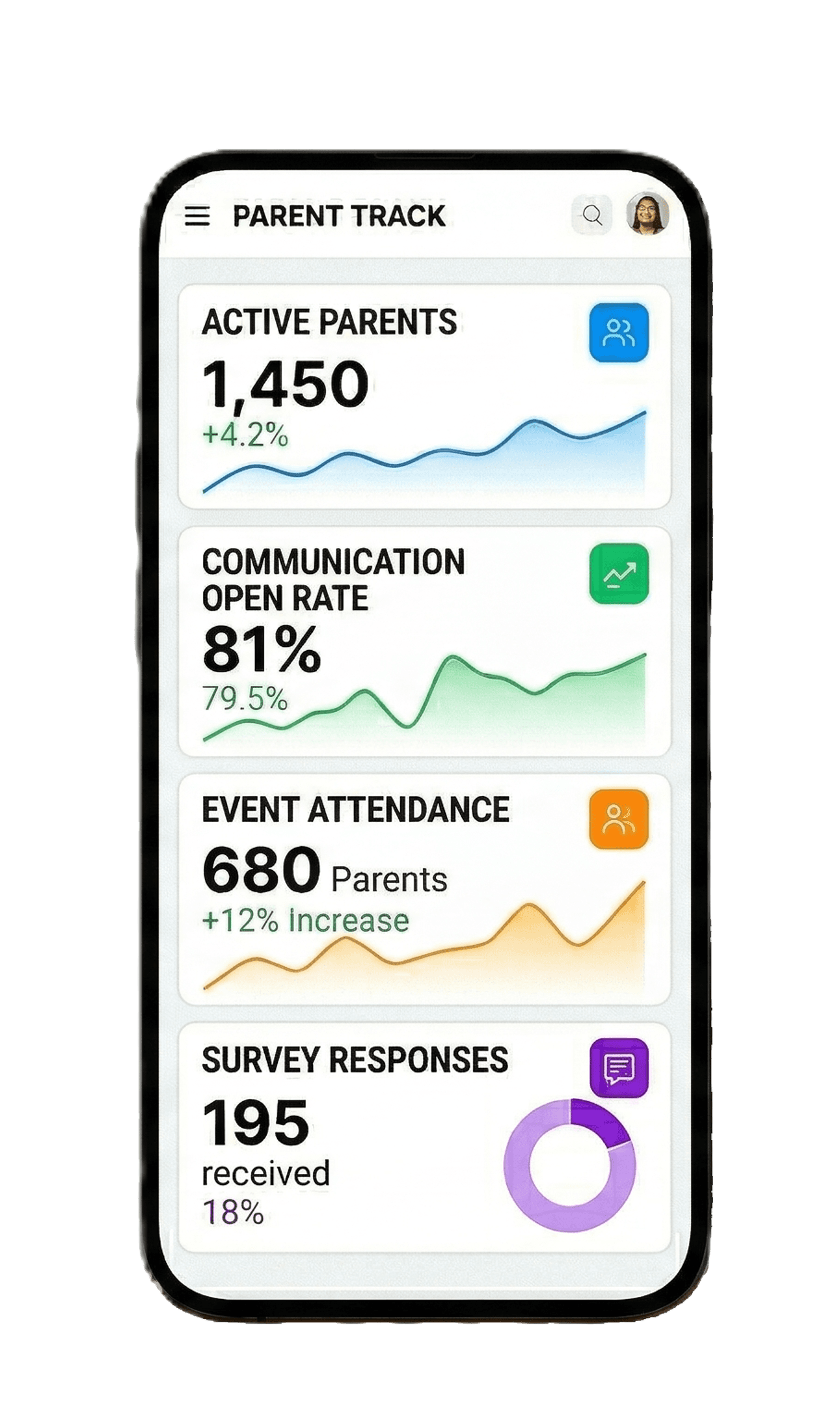
One of the most important strategies for implementing a successful parent volunteer program is transparency. Schools that implement a program to track requirements and event participation are more likely to see increased engagement numbers. Software platforms like Parent Track offer a way to increase transparency and remove barriers to engagement by making it easy for parents to volunteer and track their progress.

Approach #2: Incentive-Based Parent Engagement Programs
Schools that are unable to require hours or want a less stringent way to promote parent engagement may consider incentive-based programs. These schools can strongly recommend or encourage a certain number of parent volunteer hours, and offer rewards and incentives for families who complete these hours. Think encouragement over enforcement.
How Incentive-Based Programs can Increase Parent Engagement
Incentive-based programs focus on recognition, appreciation events, tuition credits, public acknowledgment, or small rewards. This model can foster goodwill and emphasizes positive community culture. Examples of incentives include minor discounts on tuition, recognition from the principal or head of school, parent appreciation breakfasts, or rewards like gift cards.
Pros and Cons of Incentive-Based Parent Engagement Programs
Pros:
Families feel that they being rewarded for their contribution to the school community
Rewards and recognition can gamify volunteerism and make participation even more fun
Parents without extra time or money will not feel penalized if they are unable to participate
Cons:
Families may choose to opt out if they don't recognize the importance of volunteering
Incentives may not be enough to keep parents volunteering regularly
Events may have low turnout if there are no requirements to complete certain volunteer activities
For some schools, parent volunteer incentives offer a way to promote parent engagement without punitive consequences. Incentives encourage and reward parent engagement without requiring it.
How to Successfully Implement Parent Volunteer Incentives
To encourage parent engagement in school and promote volunteer incentives, communication is key. School administrators and the principal or head of school should engage with parents and emphasize the importance of volunteering early on, at open-house events and admissions tours. Designate a recommended number of volunteer hours and explain the value of those hours to the school community.
In addition, create a rewards or incentives program with multiple tiers for parents to complete. This will give volunteers multiple opportunities for rewards on their way to achieving the recommended hours at the end of the school year. Survey families ahead of time to find out what kind of incentives they would be most interested in.
Required Hours vs. Incentives: A Side-by-Side Comparison
Requirements and incentives for parent volunteer hours can both promote engagement in school. Both have pros and cons and ultimately it's important to consider what will work best for your school.
Factors for Parent Engagement | Required Hours Programs | Incentive-Based Programs |
|---|---|---|
Ability to Project Volunteer Numbers | High | Low to Moderate |
Increased Volunteerism | High | Moderate |
Positive Community Sentiment | Moderate | High |
Need for Tracking and Reporting | Essential | Recommended |
Need for Communication | Essential | Recommended |
For many private and charter schools, a hybrid model can deliver strong results. If your school is able to require hours, consider implementing a minimum fee-based requirement and offering incentives for going above and beyond the minimum. This will increase parent engagement in a more predictable way, while still promoting a sense of community and family appreciation.
How to Engage Parents in Schools Regardless of Model
Whether your school uses required hours, incentives, or a hybrid approach, several operational fundamentals consistently improve parent engagement.
Clear communication is essential. Expectations should appear in enrollment materials, family handbooks, orientation sessions, and ongoing reminders. Consistency is key in this case.
Expanding the definition of volunteering also increases access. When schools offer a mix of in-school, after-hours, remote, and skill-based opportunities, more parents can participate. Some schools allow extended family members to contribute hours, further increasing engagement potential.
Visibility matters. Families are significantly more likely to complete parent volunteer hours when they can log activity easily and monitor progress in real time.
Finally, administrative efficiency directly affects engagement. Systems that rely on paper forms or manual spreadsheets create delays and confusion. A centralized parent engagement platform allows parents to submit hours, receive approvals, and view totals without repeated email exchanges.
From Parent Participation to Family Partnership
The parent engagement problem is rarely about motivation alone. It is about structure, clarity, and visibility.
If your school is struggling to increase parent volunteer hours, consider these questions:
Are expectations clearly defined?
Are requirements documented and reinforced consistently?
Can parents easily view their progress?
Do you have a way to track and report on parent engagement?
When schools combine expectations, flexible volunteer opportunities, and transparent tracking, parent engagement becomes sustainable rather than sporadic.
For parent volunteer coordinators, that shift means fewer follow-up emails, fewer disputes, and more predictable participation, shifting the focus to building a positive school community.
Looking to streamline parent volunteer hours and strengthen parent engagement at your school?
Parent Track helps private and charter schools centralize volunteer tracking, improve visibility, and support structured, sustainable parent engagement programs.
Frequently Asked Questions About Parent Volunteer Requirements
How many parent volunteer hours should a school require?
Most private and charter schools that require parent volunteer hours set expectations between 10 and 40 hours per family per year. The right number depends on your school’s size, operational needs, and culture. Smaller schools that rely heavily on volunteers for daily operations may require more hours, while larger schools may set lower minimums but offer more opportunities. The key is setting a number that is realistic, clearly communicated, and consistently tracked.
Can charter schools require parent volunteer hours?
Policies vary by state and by school governance structure. Some charter schools cannot legally require parent volunteer hours with a mandatory fee for noncompliance. However, many schools can strongly recommend volunteer hours or implement incentive-based programs. Before implementing a requirement, administrators should review state regulations and consult legal counsel if needed.
What if parents choose to pay the fee instead of volunteering?
This is a common concern in required-hour programs. Some families will opt to pay a fee due to time constraints. Schools can reduce this by offering flexible volunteer opportunities, including remote tasks, evening events, and skill-based contributions. Communicate the importance of volunteering for the school community, and the impact parents will have. Some schools find that once parents begin volunteering, many continue beyond the minimum requirement.
What are the best ways to increase parent engagement quickly?
If your school is looking for a fast improvement in parent engagement, start with clarity and visibility. Clearly communicate expectations, expand volunteer opportunity types, and make progress tracking simple and transparent. Schools that combine structured expectations with easy-to-use tracking systems typically see the most consistent increases in participation.
Should schools use requirements, incentives, or both?
There is no one-size-fits-all answer. Required parent volunteer hours often create predictability and higher engagement rates, while incentives build goodwill and strengthen school culture. Many private and charter schools find that a hybrid approach (establishing a minimum requirement and recognizing families who go above and beyond) produces the most sustainable results.